


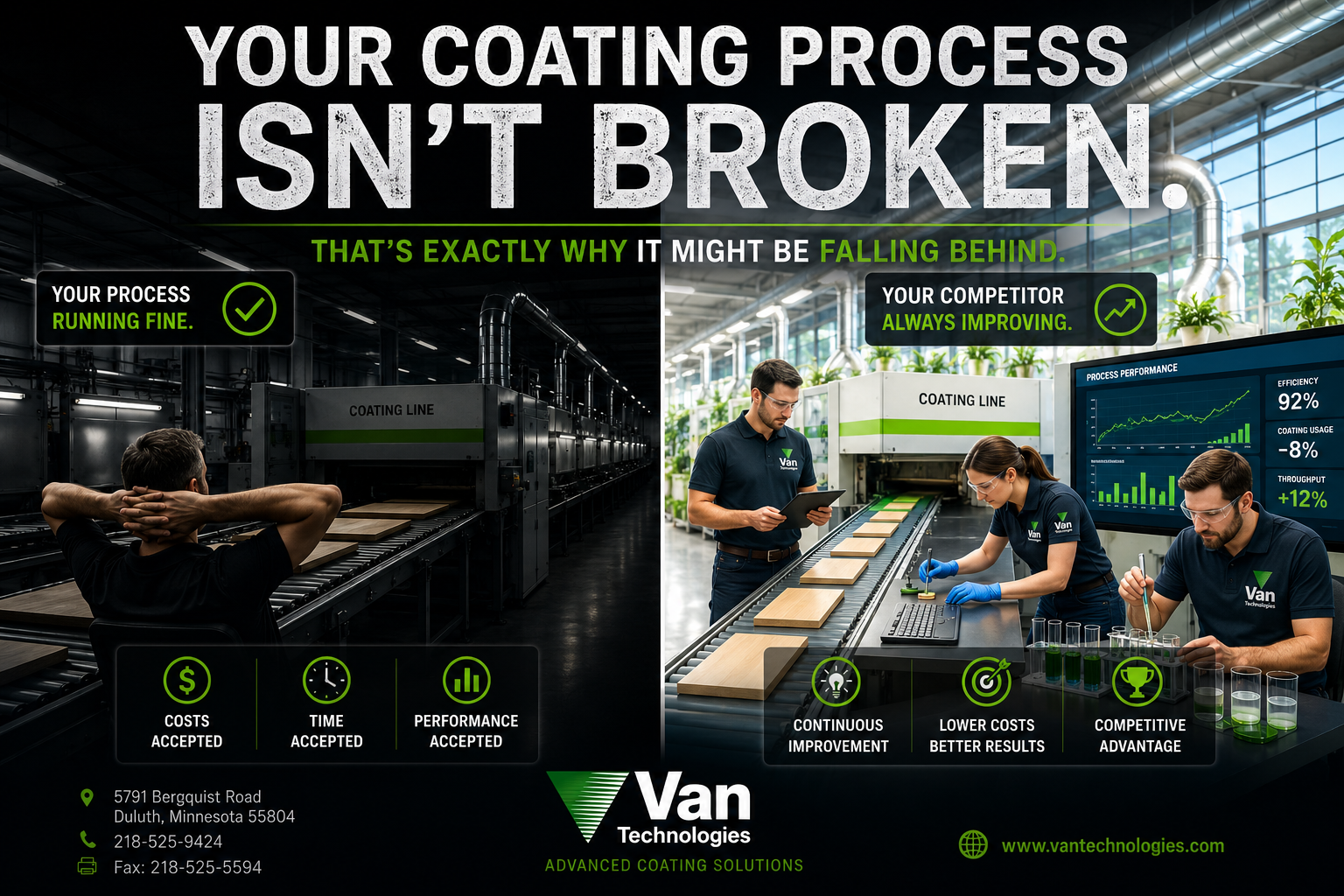
Continuous Improvement in Manufacturing: Creating Better Processes
Continuous Improvement in Manufacturing is not only about fixing problems after they happen. It is about discovering opportunities to improve efficiency, reduce waste, control costs, increase quality, and build long-term advantages in a competitive marketplace.
There is a common phrase heard throughout manufacturing:
“If it isn’t broke, don’t fix it.”
At first, this idea sounds reasonable. If production is running, coatings are applying properly, customers are satisfied, and budgets are controlled, why change anything?
The challenge is that something being acceptable does not always mean it is optimized.
Many manufacturing facilities operate successfully every day. Products move through production, customers receive orders, and business continues. From the outside, everything may appear to be working perfectly.
However, when teams examine their processes more carefully, they often discover hidden opportunities.
Small amounts of unnecessary material usage.
Longer drying periods.
Extra labor requirements.
Additional maintenance.
Unnecessary production waste.
Operators creating workarounds to compensate for process limitations.
These issues may not create immediate problems, so they often become part of the normal routine. Over time, they quietly increase costs and reduce efficiency.
That is why improvement matters.
Continuous Improvement in Manufacturing: Finding Hidden Opportunities
A process that has been used for years can feel impossible to improve because employees become familiar with every step. Teams often stop questioning why certain procedures exist because they have always been done the same way.
This creates a situation where extra costs, wasted time, and unnecessary complexity become difficult to notice.
Many opportunities for improvement do not appear as major failures.
They appear as small inefficiencies.
A few extra minutes in production.
Slightly higher material consumption.
Additional adjustments.
Minor quality variations.
Over time, these small issues can have a significant impact on profitability.
The most successful manufacturers understand that Continuous Improvement in Manufacturing is about creating better systems before problems become serious.
It means looking for ways to:
- Improve production speed
- Reduce material waste
- Increase consistency
- Enhance product durability
- Simplify application processes
- Improve workplace efficiency
- Reduce environmental impact
These improvements create stronger operations and better business results.
Asking Better Questions Creates Better Results
Companies that focus on improvement do not wait for major problems before taking action.
They ask questions early:
Can we use materials more effectively?
Can we improve production output?
Can we make our process easier for operators?
Can we reduce defects?
Can we improve final product quality?
Can we create a better customer experience?
These questions encourage innovation and help manufacturers discover opportunities that may otherwise remain unnoticed.
Improvement is not always driven by customer complaints.
Sometimes the greatest opportunities come from internal processes.
A company may discover ways to reduce operating costs while maintaining quality.
Another may improve workplace safety and make production easier for employees.
Others may increase capacity without purchasing additional equipment.
Every improvement creates value.
Why Continuous Improvement Creates Competitive Advantages
Manufacturing competition continues to increase. Companies that stop improving risk falling behind those that continue searching for better methods.
Your competitors are constantly looking for ways to become:
More efficient.
More sustainable.
More productive.
More innovative.
Even small improvements can create meaningful differences over time.
A minor advantage can become a competitive edge. A competitive edge can become long-term success.
The companies that remain leaders are not always the ones solving the biggest challenges.
They are often the ones constantly searching for better solutions.
Building a Culture of Improvement
A strong improvement culture requires more than changing equipment or materials.
It requires a mindset.
Employees, managers, and technical teams must work together to identify opportunities and create practical solutions.
When manufacturers encourage questions, testing, and innovation, they create an environment where progress becomes part of daily operations.
At Van Technologies, we believe every process has room for improvement.
A coating system, production method, or finishing process may already be working, but that does not mean it cannot perform better.
The next time someone says, “If it isn’t broke, don’t fix it,” consider asking:
Is it performing at its highest potential?
Because a manufacturing process does not have to fail before it can improve.
With Continuous Improvement in Manufacturing, there is always an opportunity to achieve better performance, stronger efficiency, and greater long-term value.





Comments are closed